

Magnifica humanitas
What's been missing from AI discourse
Most of what I read about AI lately is either breathless AI productivity hacks or general doom. LinkedIn is an especially wild ride, with tricks for optimizing agents interspersed with news of AI-driven layoffs.
So it was surprising and refreshing to spend a lot of last week reading two different documents about AI that were centered on human dignity and connection:
Pope Leo XIV’s encyclical about AI ethics, Magnifica Humanitas: On safeguarding the human person in the time of artificial intelligence.
After the Feed: Trust, connection, and the next era of social technology, a research report from New_ Public about the next era of social tech
Neither was a light read, but they both sucked me in.
Pope pilled, vol. 2
Longtime readers may recall that I was briefly pope-pilled when Pope Leo XIV was selected to be the new pope last year. Despite not being Catholic or religious at all, last week I found myself back on the pope train and diving into Pope Leo’s newly released encyclical on AI.
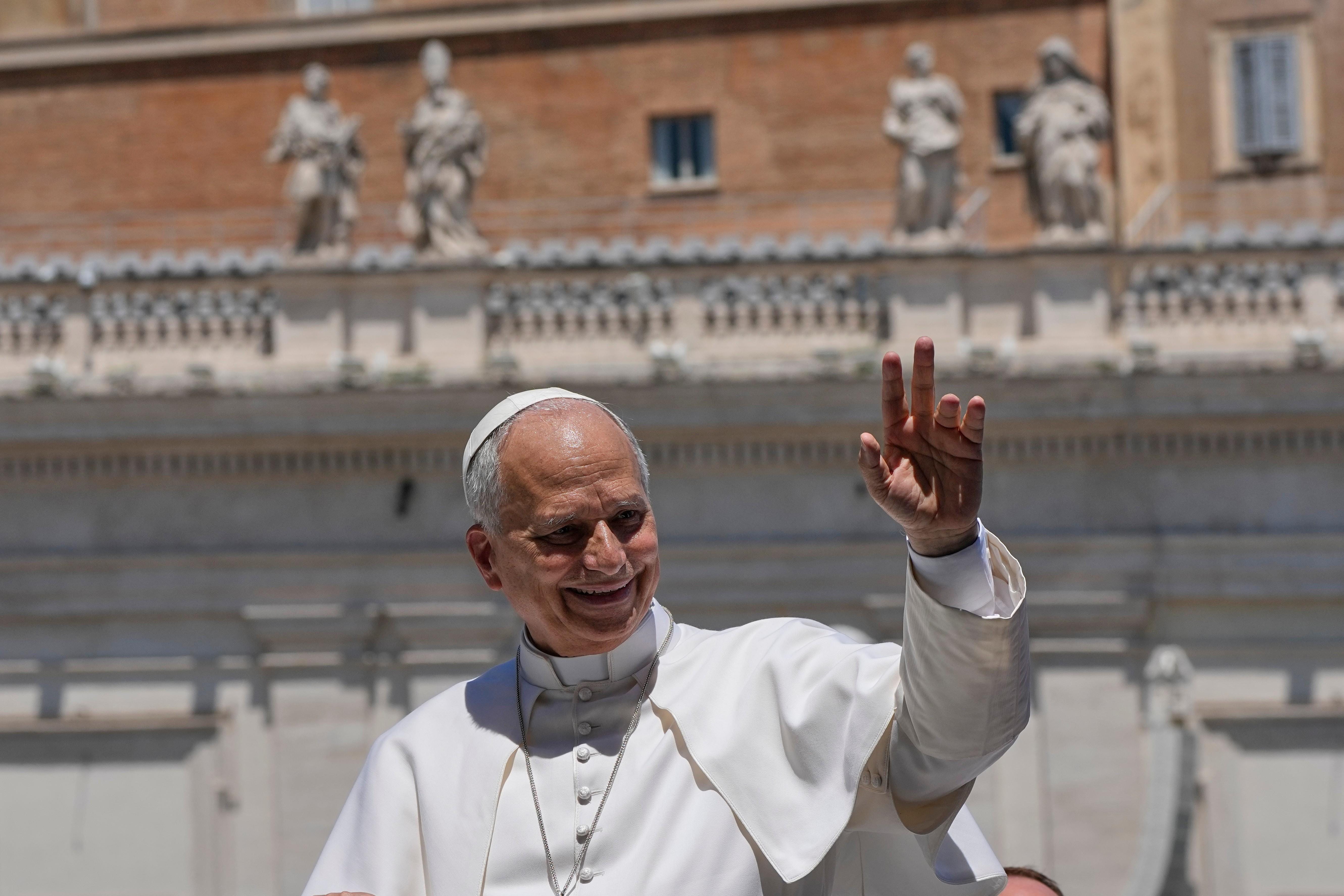
He chose to release it on the 135th anniversary of his namesake Pope Leo XIII’s encyclical about the Industrial Revolution, Rerum Novarum, which “addressed workers’ rights and capitalism at the dawn of the industrial age.”
I read most of Leo XIV’s 250-page document, though definitely skimmed some of it—especially the more religious parts. But the majority of the encyclical felt less like a religious text and more like an informed, moral critique of AI. He touched on concentration of power, job loss, disinformation, inequality, and the risk we face by reducing humans to things to be optimized. I highlighted many sections, like:
When such power is concentrated in the hands of a few, it tends to become opaque and evade public oversight, increasing the risk of distorted forms of development that give rise to new dependencies, exclusions, manipulations and inequalities.
And:
The pursuit of greater profits cannot justify choices that systematically sacrifice jobs, because the human person is an end, not a means, and the economic order must remain subordinate to human dignity and the common good.
Go off, pope!
The internet was a-flutter with Reels about drinking margaritas and reading the encyclical, Reddit posts citing religious reasons for not using AI at work, atheist’s guides, and tweets about the pope “spitting fire.” Not exactly what you associate with the Catholic Church.
Beyond the contents of the document, I found it particularly interesting how the Pope chose to share the document.
The people in the room
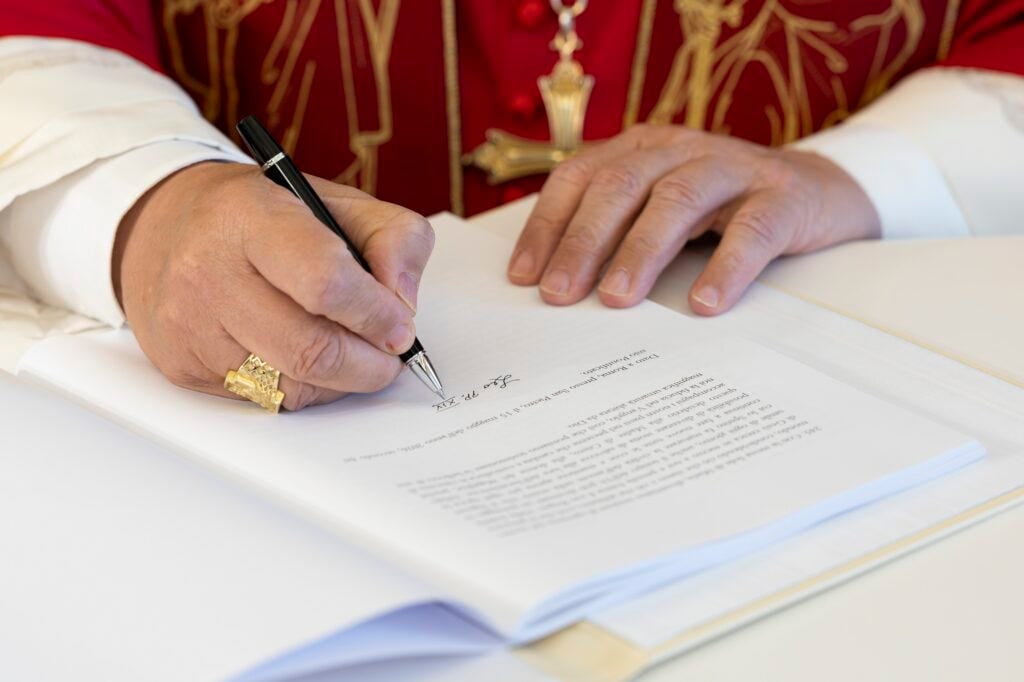
Apparently, it’s a classic Pope thing to present and sign an encyclical in the presence of cardinals and other religious leaders, but there were a few other attendees that caught my eye, namely Christopher Olah, an Anthropic cofounder and AI safety researcher. He was invited to speak as part of the event, along with others in the tech and AI ethics space.
Olah shared remarks which I found quite inspiring and surprising. Especially this part:
That is why, if we want this technology to go well, it is enormously important that there be people outside [financial and other] incentives—people who care about things going well and insist on safety, who are paying close attention, who are willing to say hard things, who are willing to be our earnest, thoughtful, critics. It is through dialogue and mutual effort, through the push and pull, that humanity will achieve great things.
This call for regulation and critique is somewhat on-brand for Anthropic, but still was a bit surprising given that Olah is definitely on the “inside.”
Another person in attendance was Eli Pariser, the Co-Director of New_ Public, a non-profit focused on creating “healthy digital public space.” He recently co-authored a fascinating research report with Angelica Quicksey and Arnobio Morelix called After the Feed: Trust, connection, and the next era of social technology which is 100% worth the read if you’re into this type of thing. But the tl;dr is that “high-trust micro communities” supported by AI may become a meaningful alternative to our current social media feeds, and that “after the feed, connection survives.” At the Vatican, he shared related thoughts, saying:
“We need a positive vision of human sociality that co-exists and is supported by a world with powerful AI.”
It was SO refreshing to read documents and remarks on AI that focused on how we shape and steward the technology to support human dignity and connection to create the kind of world that we all want to live in.
It made me feel hopeful.
An antidote
I mentioned a few weeks ago that we didn’t get into a startup accelerator we applied to. And while it was disappointing, the investors nonetheless inspired and invigorated us.
They told us that Practice stood out among all the other applicants because they’re interested in the way AI is changing “the fabric of society” and what it means to be human. Perhaps they should chat with the Pope?
When they ultimately passed on us, they said it was a tough call because they “particularly loved thinking about Practice as an antidote to our ever faster and more digital world.”
Which is exactly how we think about it!
Reading Magnifica Humanitas and After the Feed reinforced that idea. Not because Practice is going to solve AI ethics or the problems with social media, but because it is one attempt to create a cozy, more human digital space by encouraging people to make things.
And I genuinely believe that making things with our hands is one of the most magnificent things we do as humans.