

Hard launching
Letting the cat out of the bag
I’ve been researching creative hobbies for a few years, and one thing that keeps coming up—in books, studies, and expert advice—is that certain conditions make people more likely to engage in them.
Because despite all the physical and mental health benefits crafts bring, creative hobbyists face a range of headwinds.
There’s general stigma around working on a hobby, especially if it’s not monetized. It’s not always seen as a good use of time and instead may be seen as frivolous or indulgent.
Carving out time for leisure in a busy schedule can be hard enough. And according to time management expert Laura Vanderkam, it’s easier when activities happen outside of the home, with other people, and with some form of accountability.
But creative hobbies are often quiet, solo, at-home activities. They rely on self-accountability and self-imposed deadlines. It can also be hard to get recognition and reinforcement. Social media can help a bit, but mostly it’s just you and your craft mat.
And then there’s knowing what to make. Starting from a blank canvas is challenging. There are many kits and project tutorials to help crafters get started, but for the most part, after fighting stigma, time constraints, and low accountability, crafters then have to figure out what the heck they should work on.
A formula for making
Miniatures.com solved all of these problems for miniaturists for 32 years through their Creatin’ Contest. They created the ideal conditions for making something: a kit (starting point), a potential reward (recognition), and a deadline (accountability).
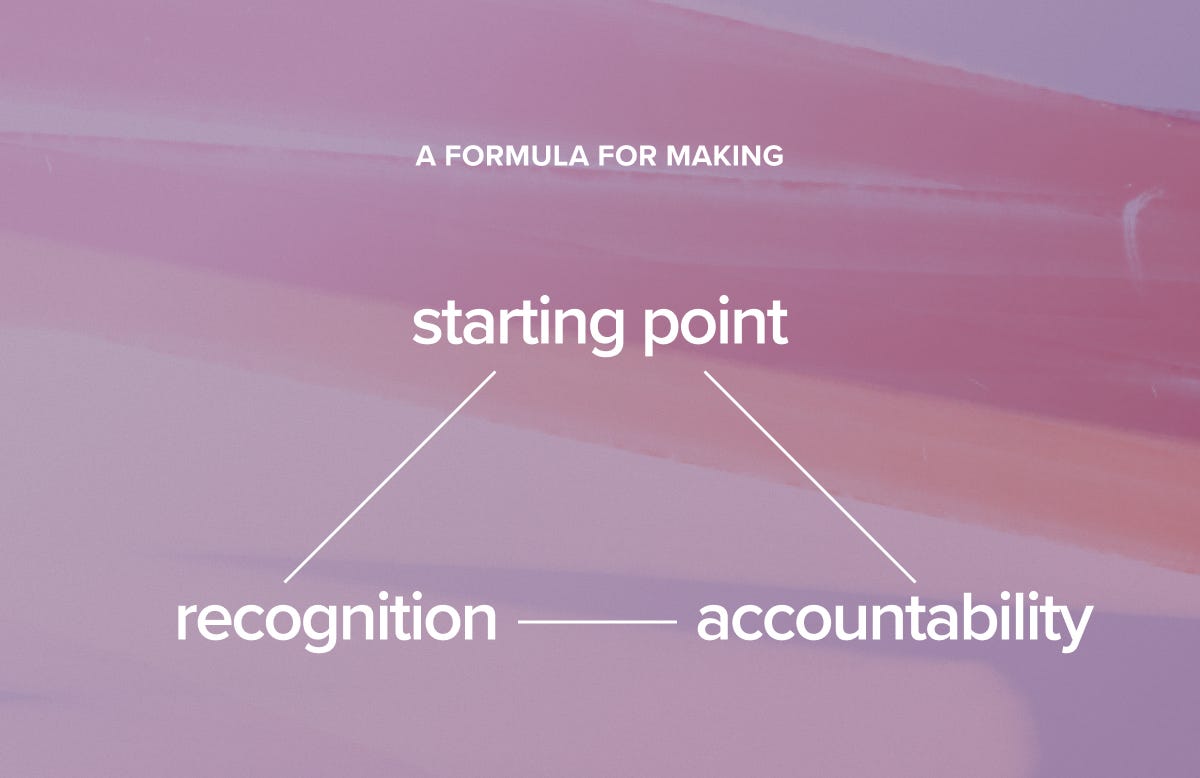
The kit for each year’s contest announced every year in January and submissions were due in early December. The long timeframe gave people space to take their time, but also a deadline to create some urgency. People in the community shared their progress with each other, first within miniature clubs, and more recently, via Instagram. While it was partly an effective marketing campaign, miniatures.com created the perfect formula for getting people to make things and engage in a creative hobby.
Despite being a new and highly-motivated hobbyist, I found the Creatin’ Contest to be a great impetus and structure for my making. My mini restaurant (2024) and store (2025) were both created for the Creatin’ Contest for that year. Well, kind of.
Miniatures.com changed ownership the summer of 2025 and the contest was put on hold. But this was after a bunch of people had purchased the kit for the year—including myself. It was unfortunate but like many other makers, I decided to complete my project roughly in time for the deadline, as if the contest was still on.
I started chatting with a few people who also decided to finish the project, including Lindsay Burke (aka @schitt.to.shine). And as Lindsay and I mourned the end of this tradition, we realized: maybe it doesn’t have to end.
A new beginning
The bulk of my career has been focused on building and enhancing software, so I am comfortable with the idea of starting something from scratch. I know it will take a lot of work and come with unexpected twists, but I know that going from 0 to 1 is possible. And it will likely be fun and rewarding. A bit scary, but also exhilarating.
So I got it in my head that we could revive the Creatin’ Contest, and Lindsay and I decided to make the idea real.
We researched kits, chatted with the new owner of miniatures.com, and brainstormed. We shared ideas, took pictures and did video tours of our past miniature projects, made sketches, and sent SO many voice notes (something Lindsay has slowly converted me to). And then Lindsay recommended we bring in Kelly from Melvin’s Miniatures. I was familiar with Kelly’s work (she is a miniaturist who sells her work online and at shows) but didn’t know her well. Her expertise with design, production, and distribution of kits proved to be invaluable.
Kelly helped us refine and prototype our design concept, and had a “laser lady” who could help manufacture the kits at scale. She also encouraged us to use preorders to help gauge demand (so smart!). I helped develop the website to support the contest, and created a very intense spreadsheet to track to-dos. It was invigorating to see our dream convert into reality, and for us to move from questioning why something had to end to figuring out how it would begin again.
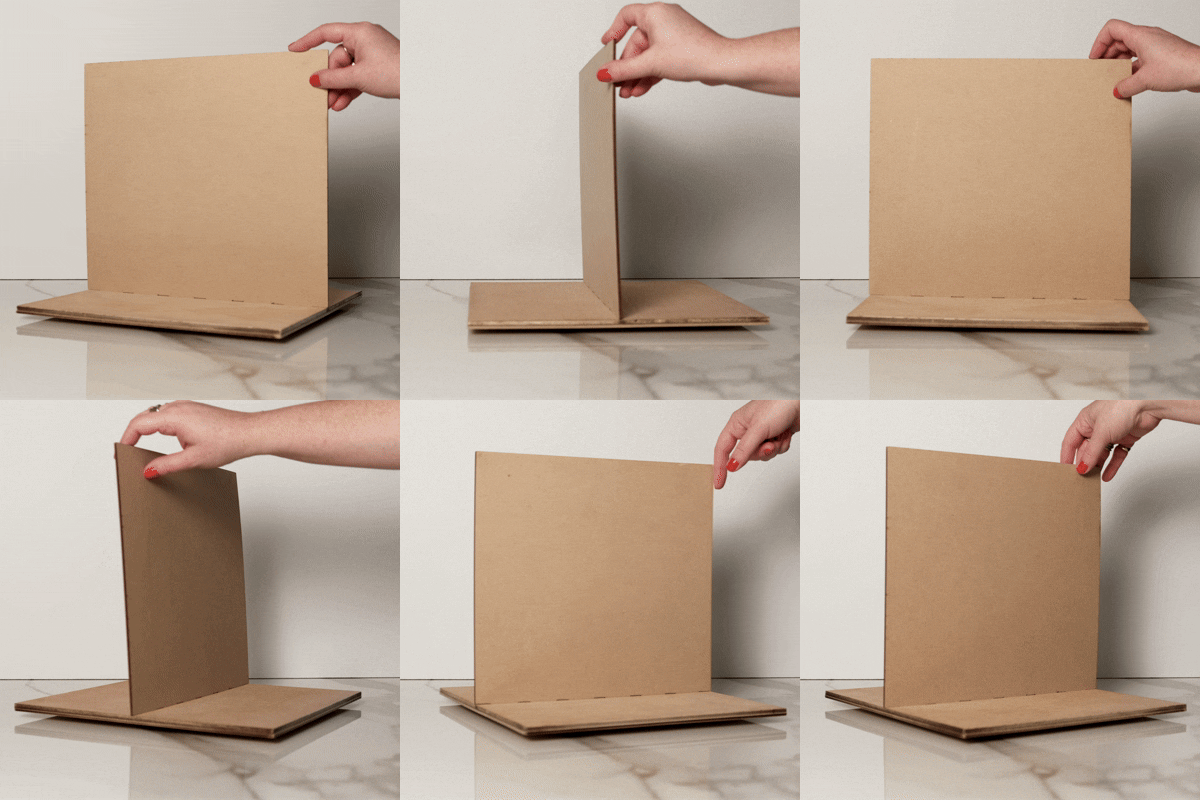
In February we launched the website and the kit preorder. In the first month we got 48 orders, which honestly exceeded our expectations. The massive scale of tech and social media distorts and diminishes our perception of impact, so while 48 may not seem like all that many orders, it represents 48 hobbyists who now had a starting point, a deadline, a sense of accountability. 48 people whose lives we had changed, hopefully for the better. 48 people!
And all along, I was thinking about Practice.
Tracking progress
When I made my tiny store and my restaurant, I tracked my progress in Practice. Knowing that it took me 205 hours and 51 minutes to build my tiny store was illuminating. Tracking how and when I spent my time, and having a reference for how I made things has been helpful as I plan other projects. And getting notifications of celebrations and comments along the way kept me motivated (though tbh I relied on intrinsic motivation to complete the project—oh, and the deadline!).
It was honestly awesome to have the Practice app as my companion. And not just because it’s an app I’ve co-created. It was genuinely useful, and, in many ways, critical to my making.
So I thought: “how can I give every Creatin’ contest participant the same benefits?” And in the spirit of my 2026 theme of Risk, I made a quick postcard with a QR code linking to a custom Creatin’ 2.0 + Practice landing page, mailed them to Kelly, who inserted one in every kit.
Fast forward to “unboxing day,” when people started receiving and excitedly sharing their kits on Instagram, and we started seeing an orange postcard in the corner of their posted videos. Beta signups exploded, and we saw one of those coveted hockey stick charts of user growth—up and to the right.
But it translated to a moment of light panic. Practice was “public” in the miniature community.
After over a year of wondering when I’d feel ready to go “social media public” with Practice on my mini account, I realized that (duh) including a postcard in 50 packages sent to miniaturists was the moment he cat was out of the bag, whether we were ready or not.
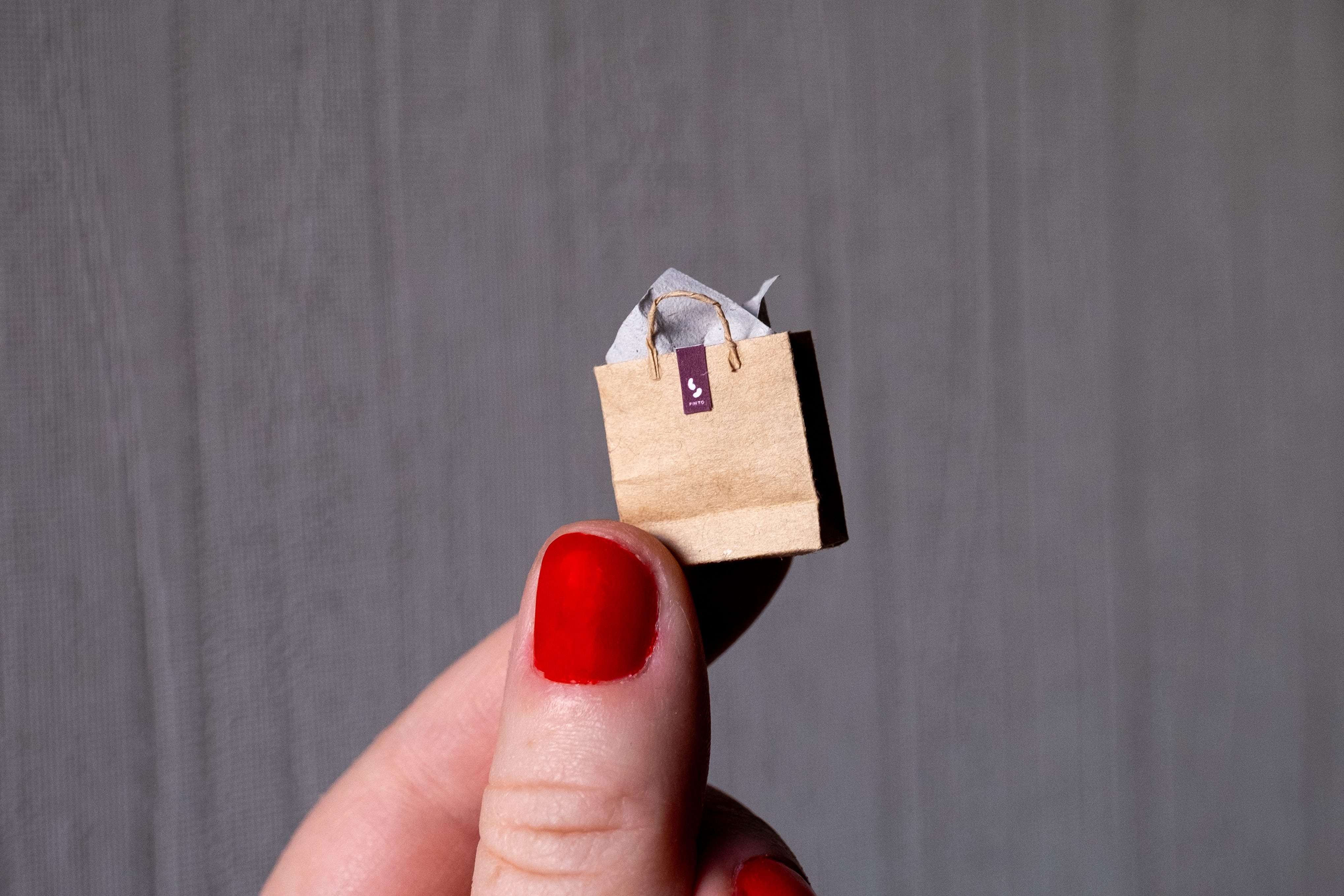
So I put together a series of Instagram stories to introduce Practice to my Instagram followers. It was time. I got a bunch of excited comments, and felt a bit of relief as I finally shared a big part of me on the largest platform I/we have.
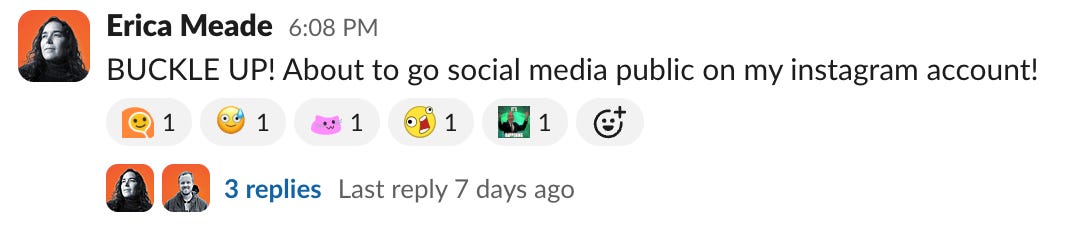
And, like all of the launches I’ve been a part of, it feels quite exhilarating!
I can't tell you how happy I am that the three of you brought Creatin' back. I am in awe of your left brain and right brain abilities to get so much done--and done WELL. Congrats, Erica!
Bravo :)
Yay! Congratulations Erica!!